
Multicultural Synergy in Action: GASSHUKU @ Daigo
2025.07.23

Students conducted fieldwork in Daigo Town from July 4 (Fri.) to 7 (Mon.), staying there for three nights and four days. The program was part of the Bachelor of Program in Global Issues (BPGI), and a total of 13 students (from 5 countries/regions), including 10 BPGI 2nd and 3rd year students and 3 students from other faculties, participated in the program. The students formed groups of 4-5 people, representing various nationalities and programs, to solve problems. Daigo Town is located in the northern part of Ibaraki Prefecture. It is facing a declining population due to the aging of the population and low birthrate, the attraction of inbound tourists, the decline of the shopping district, and the impact of climate change on the agriculture and tourism industries. In this program, each group decided on an issue to tackle in their preliminary study and conducted fieldwork.
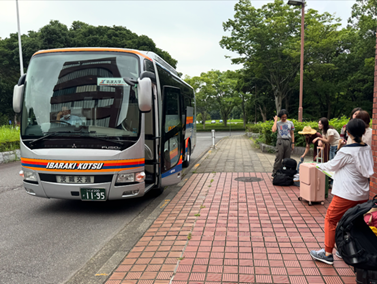
GASSHUKU began with a two-hour bus ride from University of Tsukuba. Daigo is located in the northern part of Ibaraki Prefecture, and one of the challenges is to travel for a long period of time with limited means of access. Through this trip, the participating members realized the distance between Tsukuba and Daigo.
Upon arrival, Professor Takahiro Morio gave a briefing to the participants, who confirmed what they should investigate during the fieldwork and what they should keep in mind when putting together their proposals, following the themes set by each group in the pre-study. After lunch, the group visited tourist spots including Fukuroda Falls, Oyaki School, Fujita Apple Orchard, and a hot spring in the forest. The participants used AI Taxi, a shared-ride cab service operated by Daigo Town, to get around the town by means of transportation actually used by residents and tourists, so that they could get a sense of distance and time from the perspective of both residents and tourists.
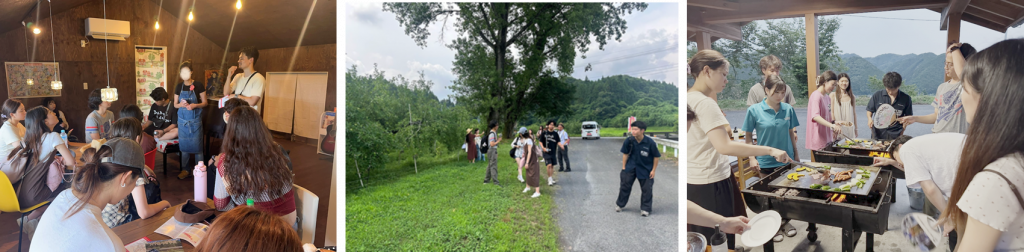
On the second day, after confirming each group’s destination and itinerary, we rented bicycles for group-based fieldwork. Daigo focuses on outdoor tourism and has a full lineup of authentic rental bicycles for cyclists. Each group visited shopping streets, restaurants, tourist spots, etc., and conducted interviews and surveys. Although the high temperature in Daigo that day was over 32 degrees Celsius, the groups made the most of their bicycles and toured a wide area with great energy.
In the evening, the group listened to the owner of DAIGO HOUSE, where they stayed for the night, talk about his efforts to promote tourism and address the issue of succession of shopkeepers.
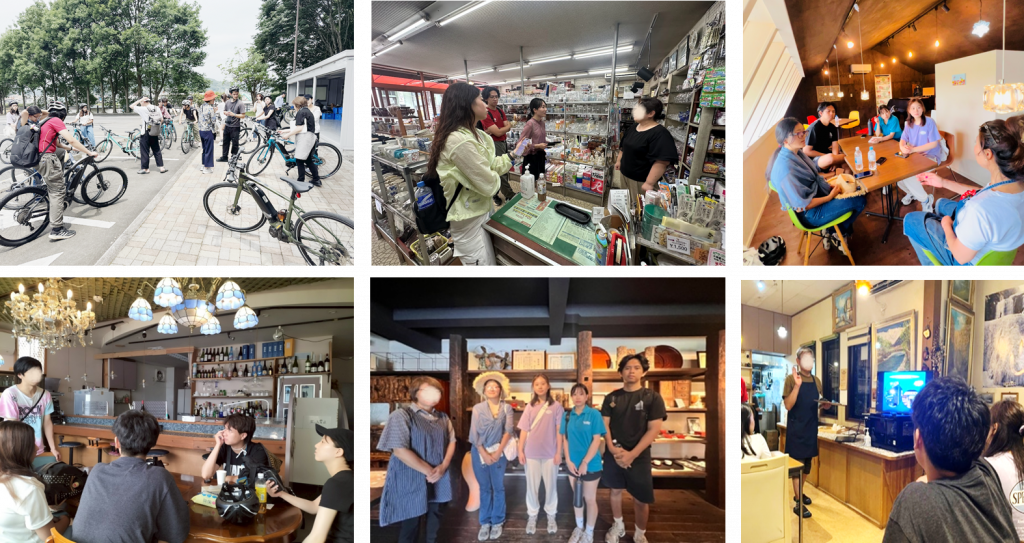
On the third day, students summarized the results of the fieldwork and prepared proposals for solutions to the issues chosen by each group. During fieldwork, ideas tend to diverge as a result of the variety of information obtained. It is quite difficult to converge divergent information and ideas into a proposal. Each group engaged in lively discussions until late at night, paying attention to concreteness and feasibility, and prepared presentation materials.
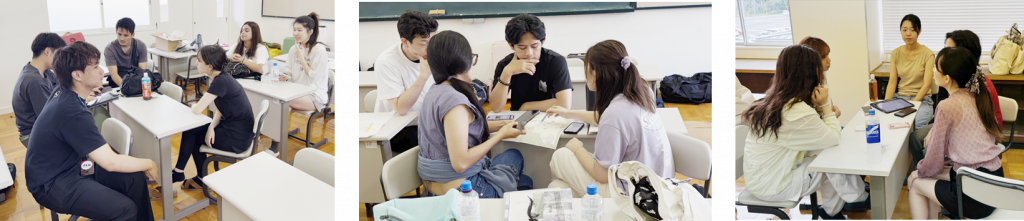
On the final day, a presentation of the results was held at B.B.D. (Brite Base Daigo), a complex facility located in the shopping district in front of the station. Each group presented a tourism plan that combined the introduction of a new transportation system utilizing existing transportation infrastructure with a new shopping district concept, communicated the attractiveness of the town using SNS and held SNS workshops in collaboration with students and store owners, and proposed measures that are friendly to the environment, tourists, and residents in response to climate change. The presentations were given in Japanese. Presentations were given in Japanese, and foreign students actively engaged in the presentations in Japanese. The presentations were attended by the Deputy Mayor of Daigo Town, officials from the Tourism, Commerce, and Industry Division and the Community Development Division, as well as people from the shopping district and farmers who cooperated in the fieldwork, and lively discussions took place.

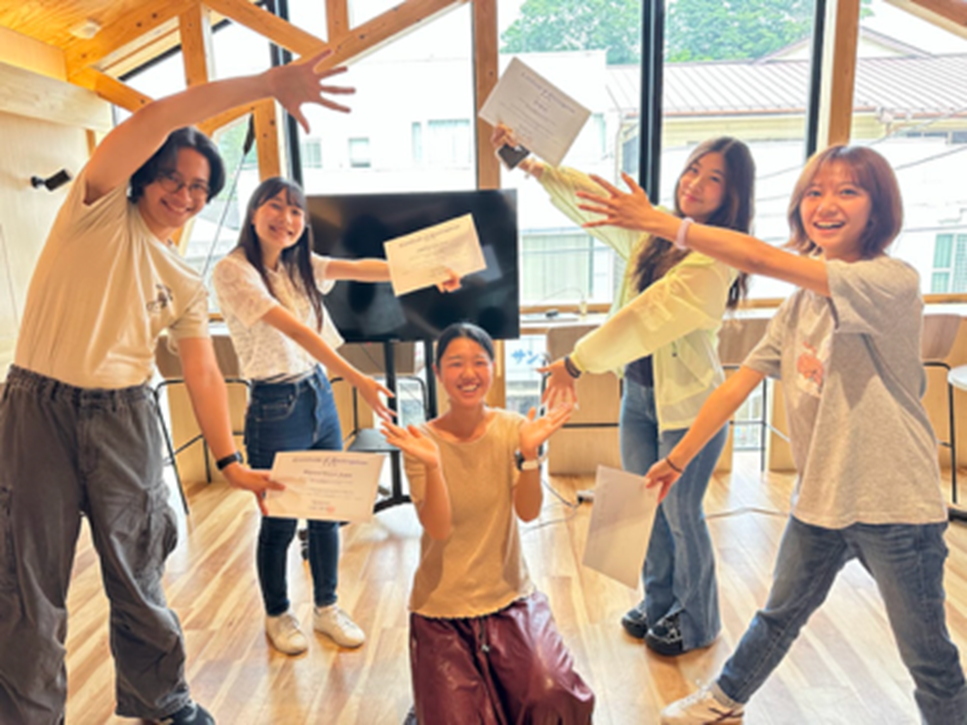
Finally, after Deputy Mayor Yasuaki Akatsu’s closing remarks, each participant was presented with a certificate of participation. In his remarks, he expressed the highest praise and gratitude for the wide range of concrete proposals—from those that could be implemented immediately to those that could be addressed in the medium to long term. He also mentioned that the town would consider these proposals for potential implementation.
After the final presentation, the participating members enjoyed local gourmet food in Daigo Town during their last period of free time, before heading back to the university.
This program was co-hosted with Daigo Town and carried out with the planning and cooperation of Civic Power Inc., Satoyume Inc., Fujita Apple Orchard, DAIGO HOUSE, and Saku Café. We would like to express our sincere gratitude to all of them.