
Promotional Video for the Multicultural Co-Learning Program in Papua Province, Indonesia, Now Available
2026.06.16
A promotional video of the Multicultural Co-Learning Program held in Papua Province, Indonesia, in August 2025 is now available. We invite you to watch it.
JV-Campus Content Card: Overseas Training I
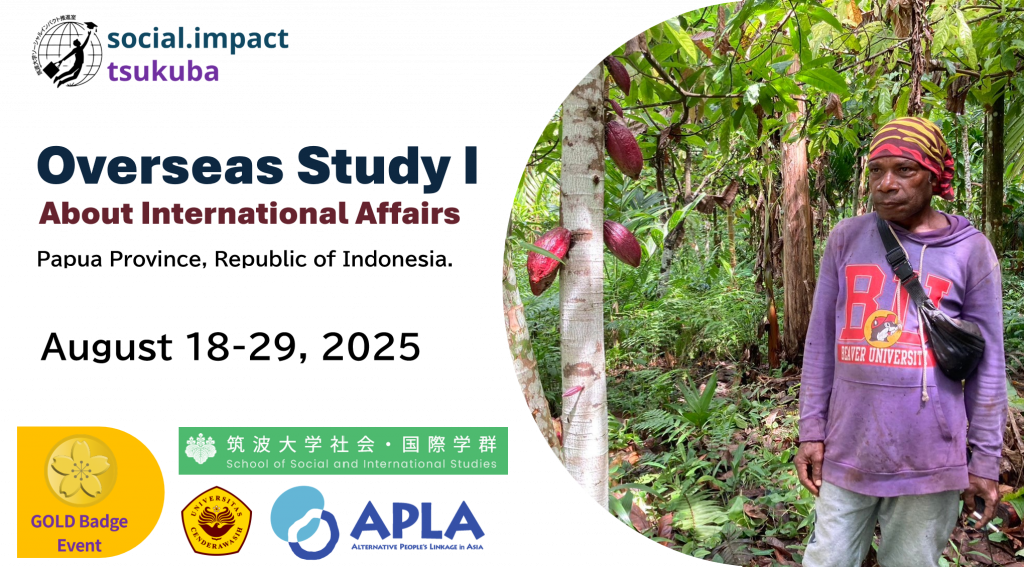
This overseas training program is designed to help students learn about and gain practical experience in cross-cultural understanding, international relations, and international cooperation. Participants spent 12 days in Papua Province, Republic of Indonesia, engaging in a variety of learning and field activities.
Program Overview
Cross-Cultural Learning
Participants will stay with an indigenous family in a village in Papua Province, Indonesia, for six days and five nights. Through this homestay experience, they will gain first-hand insight into a different way of life and deepen their understanding of another culture and society. Activities include helping prepare meals, bathing in the river, learning how sago starch—the local staple food—is harvested, visiting cacao farms, and attending Sunday church services. Students will also choose their own research topic and conduct interviews with members of the local community. By learning about another culture and society, participants will also have the opportunity to reflect on what they have previously taken for granted in their own.
Learning about International Relations
Participants will visit both a large-scale oil palm plantation operated by a private company and an indigenous cacao farm. In rural Papua, commercial oil palm plantations have expanded rapidly, resulting in the loss of tropical forests and significant impacts on indigenous communities. At the same time, local enterprises are working to protect both the forests and indigenous livelihoods by supporting cacao production and promoting community-based trade (a broader concept of fair trade). Both palm oil from commercial plantations and cacao produced by indigenous communities are exported to Japan, making them part of our everyday lives. By observing both production sites, participants will gain a deeper understanding of the connections that link people across national borders.
Learning and Practicing International Cooperation
Participants will visit KakaoKita, a local company that supports indigenous cacao farmers by purchasing their cacao at fair prices and helping sustain their livelihoods. The company exports cacao to Japan through a community-based trade initiative, delivering cacao products directly to Japanese consumers. During the visit, students will learn how producers and consumers can support one another through this trading model and explore the potential of international cooperation through responsible consumption and purchasing decisions.
After returning to Japan, participants will put their learning into practice by running the “Kakao, Kita!” Café at the University Festival (Sohosai). The café will sell desserts and drinks made with cacao sourced from KakaoKita. This activity serves as a practical form of international cooperation by supporting KakaoKita’s community-based trade initiative and contributing to the livelihoods of indigenous communities in Papua. The proceeds will be donated to the village’s cacao cooperative, helping fund the construction of its long-awaited office building.
A paper on the educational practice of changing perspectives, implemented through the Overseas Training I (Multicultural Co-Learning Program), has been published.
The paper explores how anthropologists and area studies scholars can contribute to the development of globally competent individuals.