【Activity Report】Animals and Disasters in Japan and Taiwan: Perspectives from the Environmental Humanities
2026.06.30
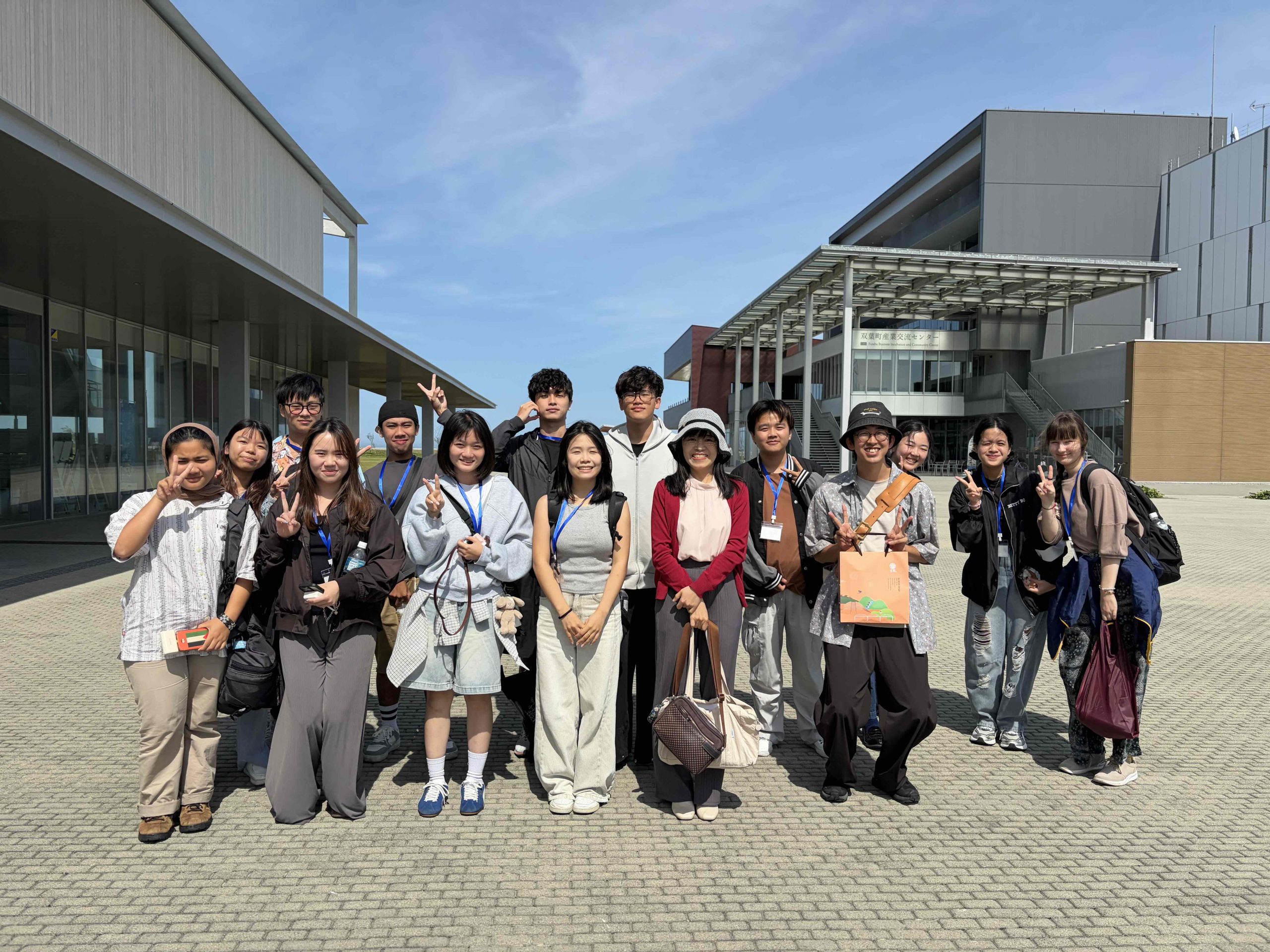
From June 15 to 19, 2026, students from University of Tsukuba and the Department of English at National Taitung University participated in a collaborative program exploring the relationship between animals and disasters from the perspective of the environmental humanities. The program focused particularly on earthquakes, a natural disaster commonly experienced in both Japan and Taiwan.
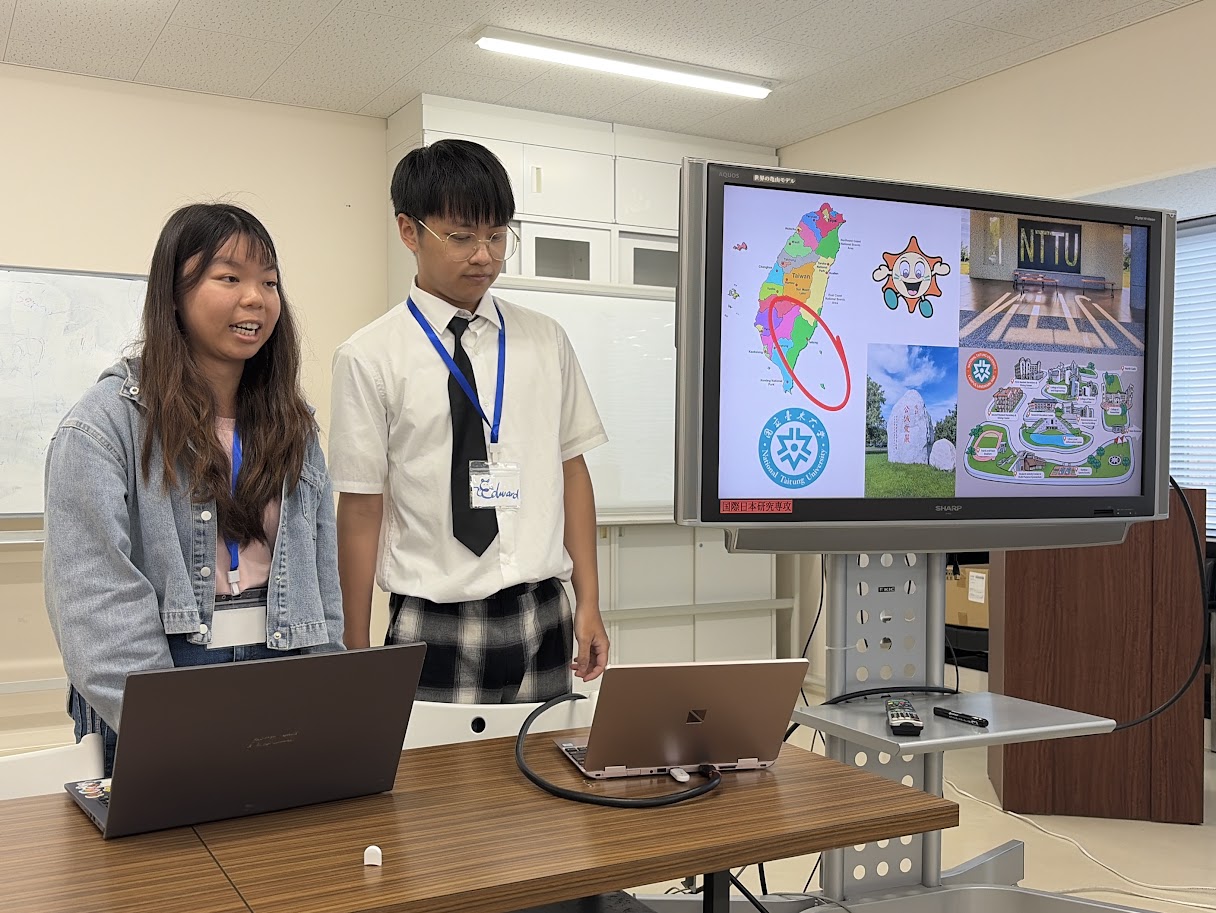
Prior to the program, participants studied literary works and films addressing animals and disasters, including the Taiwanese film Twelve Nights and the Japanese documentary Inu to Neko to Dōbutsu to 2: Animals in the Great East Japan Earthquake. They then gave presentations and engaged in discussions as part of the graduate course World Literature and Culture and Japan 2A. Drawing on the diverse backgrounds of participants from Taiwan, China, South Korea, Thailand, Iran, France, Brazil, and Japan, discussions compared systems for pet ownership and animal protection in different countries and explored ways of representing the “voices” and agency of animals.
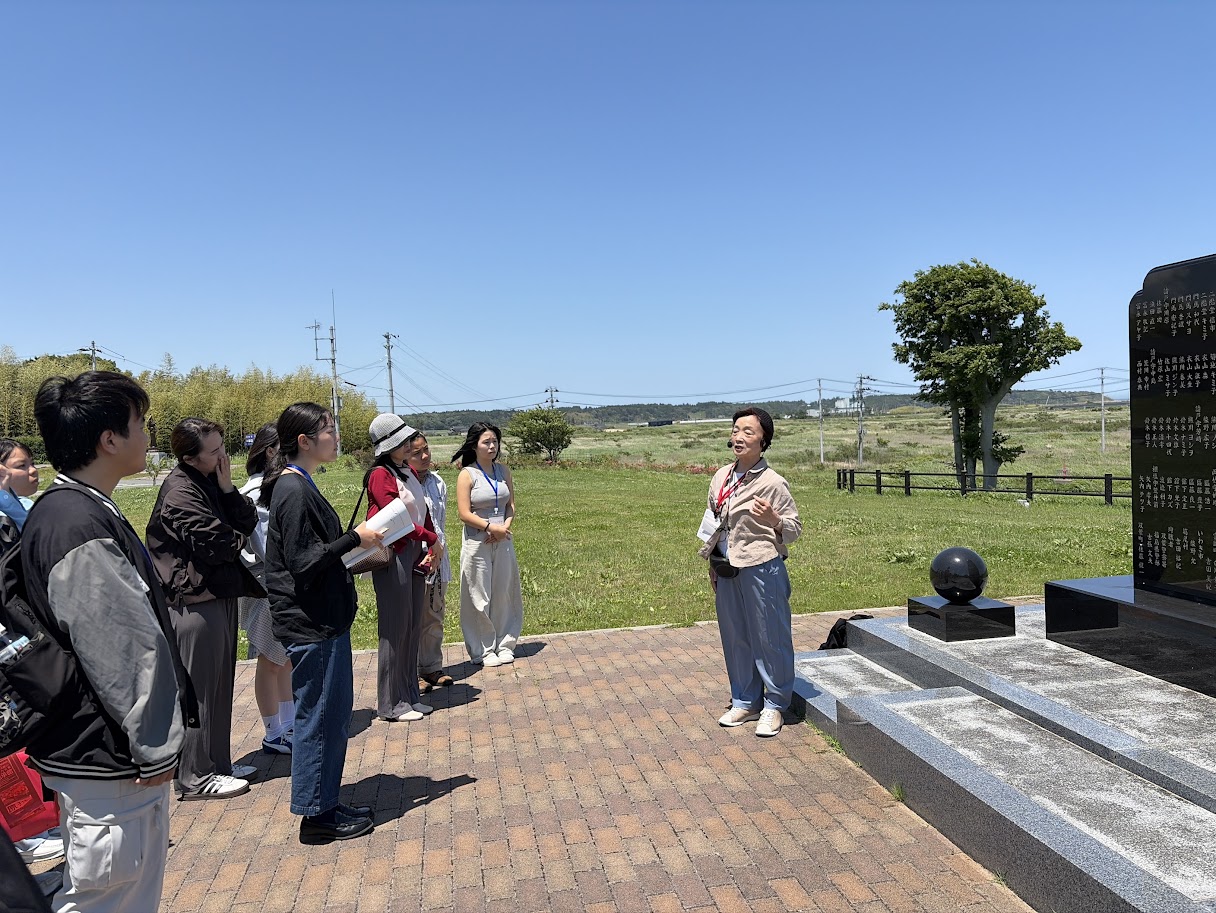
To gain a deeper understanding of the impact of disasters, the participants visited the Great East Japan Earthquake and Nuclear Disaster Memorial Museum in Futaba, Fukushima Prefecture. Through the museum exhibitions and discussions with museum staff, they learned about the events of the Great East Japan Earthquake, the devastation caused by the tsunami, and the ongoing process of recovery and reconstruction.
During lunch at the Futaba Business Incubation and Community Center, participants met with Mr. Ryo Fukasawa, who relocated to Futaba and now operates a coffee roastery. He shared how his experiences traveling around the world as a university student have shaped his career and influenced his engagement with local communities. In the afternoon, the group visited Hope Ranch Yoshizawa in Namie, where the ranch owner, Mr. Masami Yoshizawa, spoke about the impact of the Fukushima Daiichi nuclear accident on livestock farmers, the significance of continuing to care for cattle despite the disaster, and the broader implications of energy policy in both Japan and Taiwan.
On the following day, participants reflected on the program through group discussions. They concluded that the consequences of disasters should not be regarded as issues of the past but as ongoing challenges requiring empathy and imagination to understand them as matters that concern us all. They also discussed the potential contributions of the humanities in fostering such perspectives.
The program concluded with a public lecture by Professor Ya-Lan Chang of National Taitung University entitled From Animal Cries to Vegetal Silence: Twelve Nights, Han Kang, and the Ethics of Care. The lecture introduced participants to the connections between animal studies, plant studies, and care ethics, followed by an active question-and-answer session.
Through these activities, participants developed a deeper understanding of Japanese and Taiwanese societies from international and interdisciplinary perspectives centered on animals and disasters. They also strengthened their multilingual communication skills and explored a range of future pathways, including long-term study abroad, graduate education, and engagement with local communities. For many participants, the strong English proficiency and independence demonstrated by the Taiwanese students provided considerable inspiration. Building on the success of this program, future initiatives will explore opportunities for student exchanges with National Taitung University and the development of overseas field programs in environmental humanities, including connections with the university’s existing programs in Australia.