
[Activity Report] Multicultural Co-Learning Program on Developing Education Policy Proposals to Address Global Challenges
2026.02.13
1. Introduction
From December 7 to 13, 2025, a multicultural co-learning program on education policy was conducted through an academic study visit to Shanghai, China, and Khon Kaen, Thailand. The program aimed to provide participants with an experiential and comparative understanding of how global challenges are addressed within the educational systems and practices of different countries through exchanges with local universities and students, visits to educational institutions, and collaborative learning among participants.
The program was attended by one undergraduate student and three graduate students from the Degree Programs in Education and Physical Education. Three faculty members from the Institute of Human Sciences accompanied the group as supervisors and program leaders.
Prior to departure, a pre-program session was held on December 2. During this session, participants confirmed that the study visit would serve not merely as a site visit or cultural experience, but as an opportunity for mutual learning through interaction with students and researchers in different educational contexts. They also discussed the importance of avoiding assumptions based solely on their own educational systems and research practices, while approaching their experiences from a comparative perspective. With this shared understanding, the group departed for Shanghai, China, the first destination of the program.
2. Academic Study Visit in Shanghai, China: Experiencing a Distinct Form of Internationalization Through the City, Community Learning Facilities, and Universities (December 7–9)
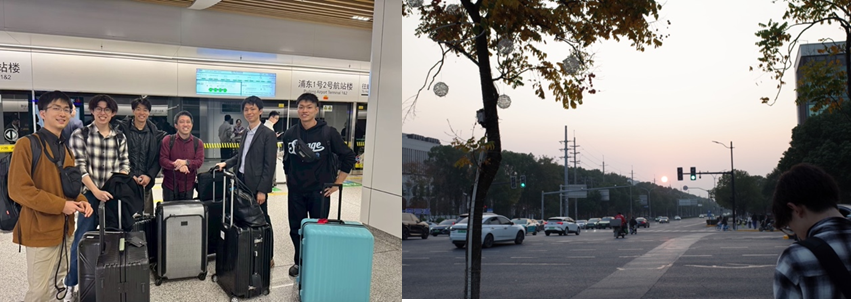
Upon arriving at Shanghai Pudong International Airport on December 7, the group traveled to their hotel near East China Normal University by taking the airport rail link and the Shanghai Metro. Although the journey was long and involved several transfers, participants were able to navigate it smoothly thanks to the clear signage and efficient transportation system. The experience left a strong impression of Shanghai’s well-developed public infrastructure and highly organized urban transportation network.
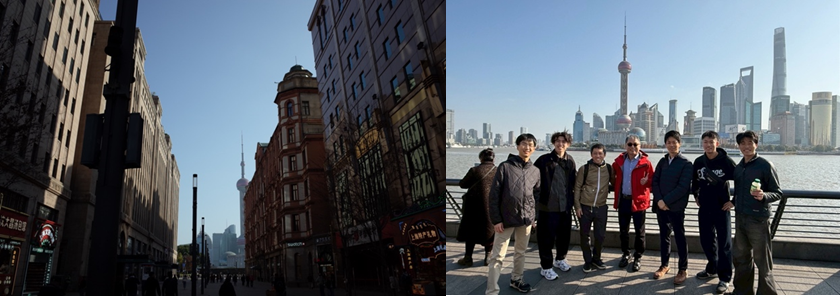
On the morning of December 8, the group traveled by metro to the East Branch of the Shanghai Museum. Along the way, they stopped to explore several of Shanghai’s most iconic landmarks, including People’s Square, Nanjing Road East, and the Bund.
The cityscape, where historic buildings stand alongside modern skyscrapers, vividly reflected both China’s modern history and its rapid urban development. Participants observed how the urban environment itself functions as a medium for conveying history, culture, and social values.
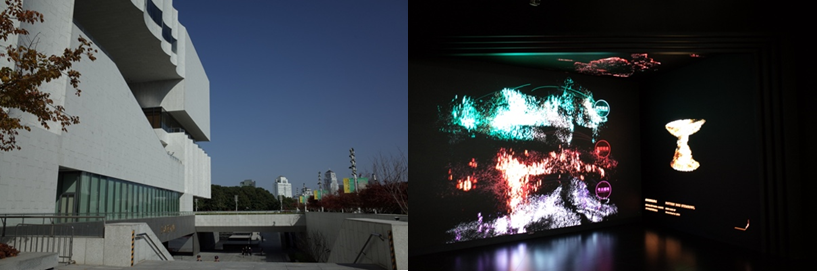
At the East Branch of the Shanghai Museum, participants were immediately struck by the building’s distinctive architecture, which blends modern and classical design elements. Many were also surprised that admission was free. Inside, they were impressed by the museum’s comprehensive exhibitions, which present Chinese history from ancient times to the present in a coherent and carefully structured narrative.
Participants observed that the exhibition layout, interpretive displays, and use of multimedia had been thoughtfully designed to guide visitors’ understanding of history. This provided a valuable opportunity to recognize the important role that museums and other forms of public education play in shaping historical awareness and cultural values in China. During the post-program reflection, one participant commented, “I felt that the museum itself conveyed a powerful educational message.”
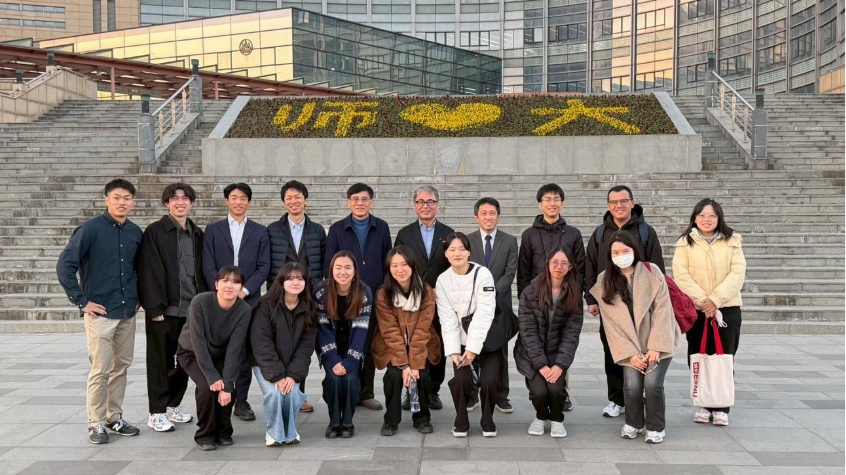
On the afternoon of December 8, participants attended a lecture delivered in English on the internationalization of higher education for international students. The lecture provided an opportunity to learn about China’s higher education strategy in the context of globalization, while also tracing the historical development of the country’s efforts to internationalize its higher education system.
The group also met with four graduate students from Japan who were participating in the CAMPUS-Asia 6 program at East China Normal University. Through these exchanges, participants gained valuable insights into China’s higher education system as well as Chinese culture from the perspective of students studying there.
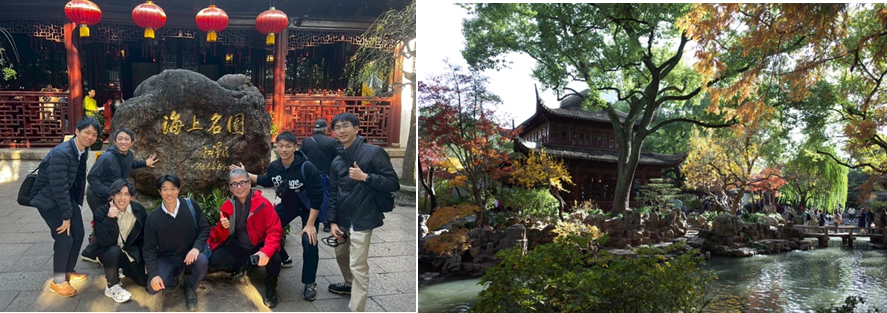
On the morning of December 9, the group visited Yuyuan Garden, a renowned classical Jiangnan-style garden built during the Ming Dynasty in the mid-16th century. Located approximately two kilometers south of the Bund, which the participants had visited the previous day, the garden offered a striking contrast to the surrounding modern cityscape, creating the impression of a tranquil oasis in the heart of a bustling metropolis. Seeing local residents enjoying the autumn foliage also reminded participants of the cultural appreciation for seasonal beauty that is shared across many parts of Asia.
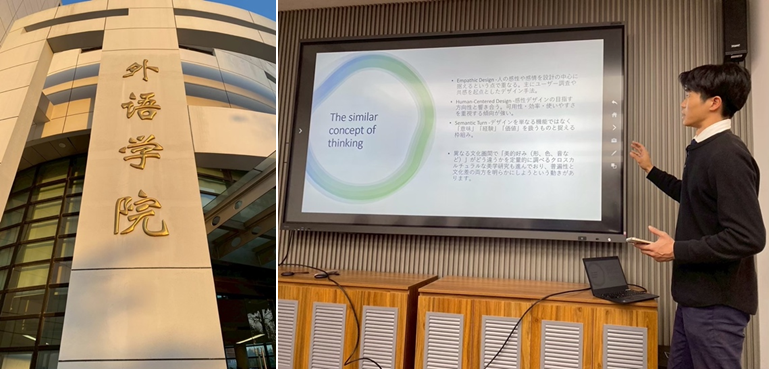
On the afternoon of December 9, the group visited the Department of Japanese Studies in the Faculty of Foreign Languages at East China Normal University. The program included research presentations in Japanese by the participants, a question-and-answer session, and academic discussions with faculty members and students from the department.
Supported by the local students’ excellent Japanese language proficiency, the discussions extended beyond the research presentations to topics such as research methodologies, the understanding of Japanese culture in China, and the experiences of university students in both countries. During the post-program reflection, one participant commented, “The experience made me think about how closely research at Japanese universities is connected to broader social issues.”
3. Academic Study Visit in Khon Kaen, Thailand: The University’s Role in Educational Improvement (December 10–12)
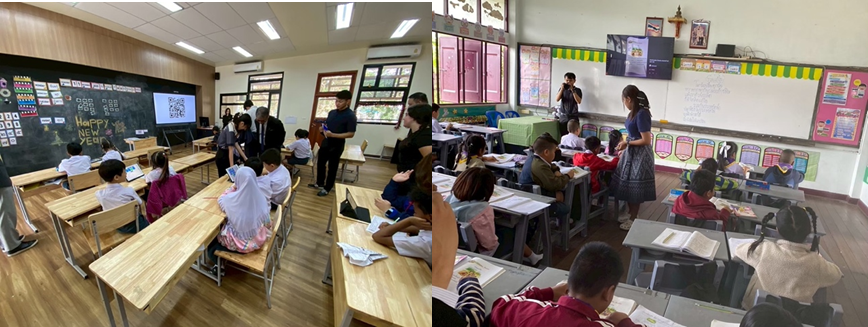
On December 10, the group traveled from Shanghai to Khon Kaen, Thailand, via Bangkok International Airport. In contrast to Shanghai, Khon Kaen is a smaller city where the close relationship between the local community and the university is evident throughout the region.
On the morning of December 11, participants visited the Khon Kaen University International Demonstration School and a demonstration public school in the Ban Sila Subdistrict. At the former, they observed a curriculum designed to meet international standards, while at the latter, they saw how local culture and community issues were incorporated into educational practice. These visits provided valuable opportunities to examine the relationship between educational quality assurance and local context.
One particularly notable observation was that, despite their different educational environments and institutional characteristics, both schools benefited from the university’s continuous involvement in improving primary education through teacher training and curriculum development. Participants came to appreciate that educational systems are not merely abstract institutional frameworks but are sustained through strong partnerships and relationships among universities, schools, and local communities.
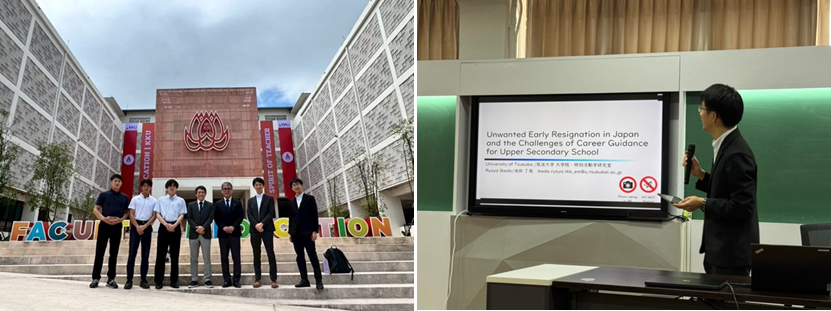
On the afternoon of December 11, the group participated in an academic exchange session at the Faculty of Education, Khon Kaen University. Through presentations and discussions conducted in English, participants gained practical experience in communicating their research and engaging in academic dialogue in a multilingual environment.
The group also met with two graduate students from Japan who were studying at Khon Kaen University under the CAMPUS-Asia 6 program. They exchanged perspectives on Thailand’s education system and culture while taking part in collaborative learning activities.
Participants reflected that learning in a multilingual environment involves much more than language proficiency; it also requires adapting how ideas are expressed and how individuals engage in discussion. One participant noted, “Discussing in English made me realize my own patterns of thinking.” The experience therefore contributed significantly to one of the program’s key objectives: developing multilingual understanding through authentic intercultural communication.
On the morning of December 12, the group paid a courtesy visit to the President of Khon Kaen University, where they exchanged views on the significance of inter-university collaboration and future opportunities for cooperation. During the meeting, participants shared the understanding that academic partnerships are not one-time initiatives but are built and sustained through mutual trust and long-term collaboration.
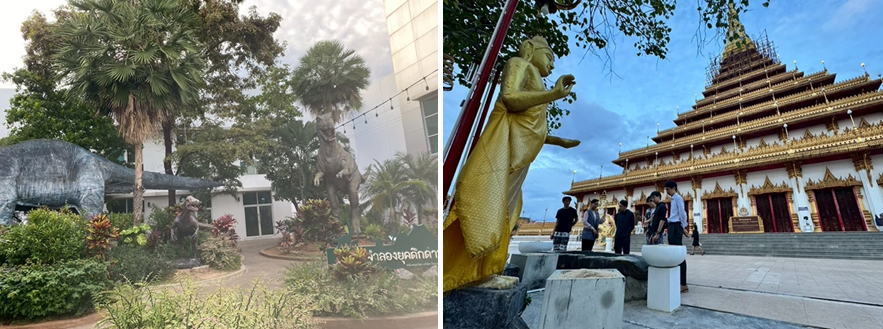
In the afternoon, the group visited the university museum and a local Buddhist temple, providing an opportunity to learn about the history and cultural heritage of Khon Kaen.
4. Post-Program Reflection and Conclusion (December 15)
Following their return to Japan, participants gathered on December 15 for a post-program reflection session. They delivered presentations in English and reflected on their experiences throughout the study visit.
Participants noted that their time in Shanghai demonstrated how education is closely connected to broader national and social development, whereas their experience in Khon Kaen highlighted the importance of interpersonal relationships and community engagement in educational practice. By experiencing these two distinct educational contexts, they were able to view Japan’s education system and their own research from new perspectives, gaining insights that will inform their future academic studies and research. The program successfully provided the meaningful learning experience envisioned by the Multicultural Co-Learning Open Badge.
Overall, the two-country academic study visit offered participants much more than an opportunity for intercultural understanding. It encouraged them to reflect on the relationship between education and society, as well as between academic research and the public good. Through learning in diverse settings—including cities, universities, schools, museums, and local communities—the participants gained experiences that are expected to serve as a valuable foundation for their future research, educational practice, and international engagement.