[Activity Report] Multicultural Co-Learning Through Musical Exchange Between Japan and the Home Countries of International Students
2026.02.10
On December 15, 2025, a music festival was held in Room 306 of Building 2A at the University of Tsukuba. The event was organized in collaboration with the CAMPUS-Asia6 project under the Inter-University Exchange Project. It brought together Japanese students participating in the University’s Multicultural Co-Learning activities and international students from the CAMPUS-Asia6 program to deepen cross-cultural understanding through musical exchange.
The program aimed to foster a greater appreciation of different cultures, broaden participants’ international perspectives, and strengthen future international collaboration by providing opportunities for students to learn about and appreciate one another’s cultural backgrounds through music.
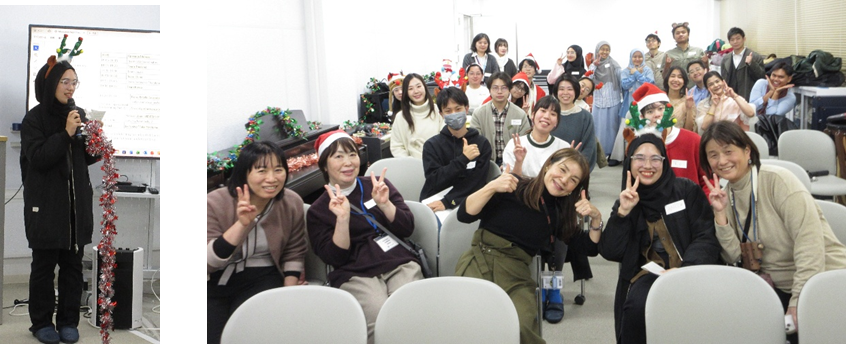
The event was hosted by an international student from Malaysia and consisted of three parts: (1) presentations on traditional music and musical culture from participants’ home countries, (2) solo instrumental performances by students, and (3) a handbell performance and group singing by all participants.
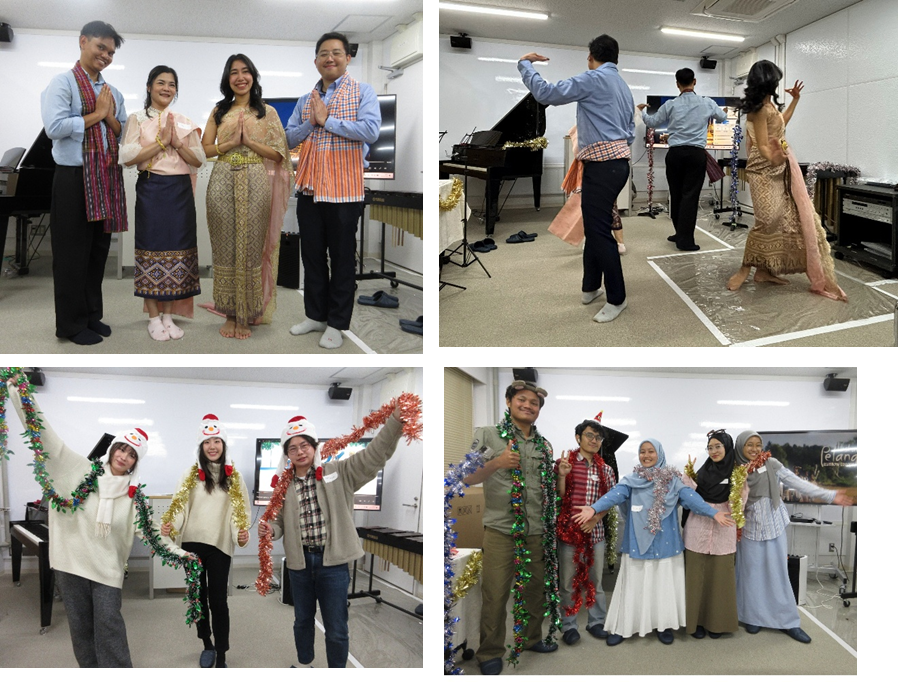
In the first session, students used presentation slides prepared during the pre-program study sessions to introduce the music, musical traditions, and music education of their home countries. They also performed songs and dances representing their cultures. The Japanese student team presented a quiz featuring anime songs from the Showa era and the present day, as well as musical instruments commonly taught in Japanese elementary, junior high, and high school music classes.
Through music — a universal language — participants enjoyed learning about one another’s cultures while deepening their mutual understanding and appreciation of cultural diversity.
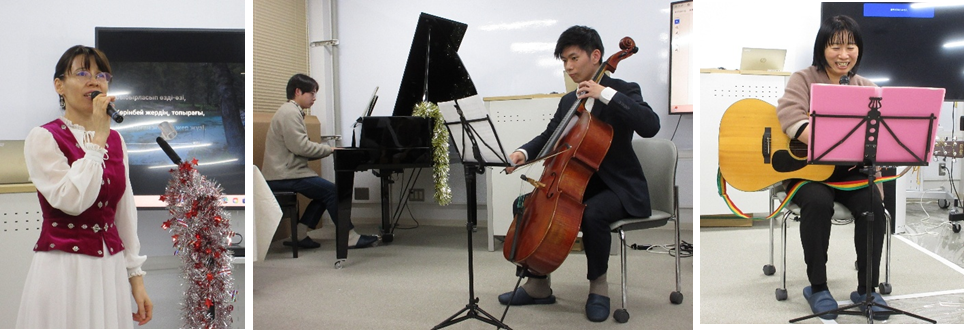
In the second session, a Japanese student and an international student from South Korea performed a cello and piano ensemble, captivating the audience with their gentle and harmonious performance. Participants also enjoyed a heartfelt performance of Studio Ghibli songs by a faculty member, whose singing and piano accompaniment conveyed warmth in every note. In addition, a researcher moved the audience with a beautiful vocal performance that left a lasting impression.
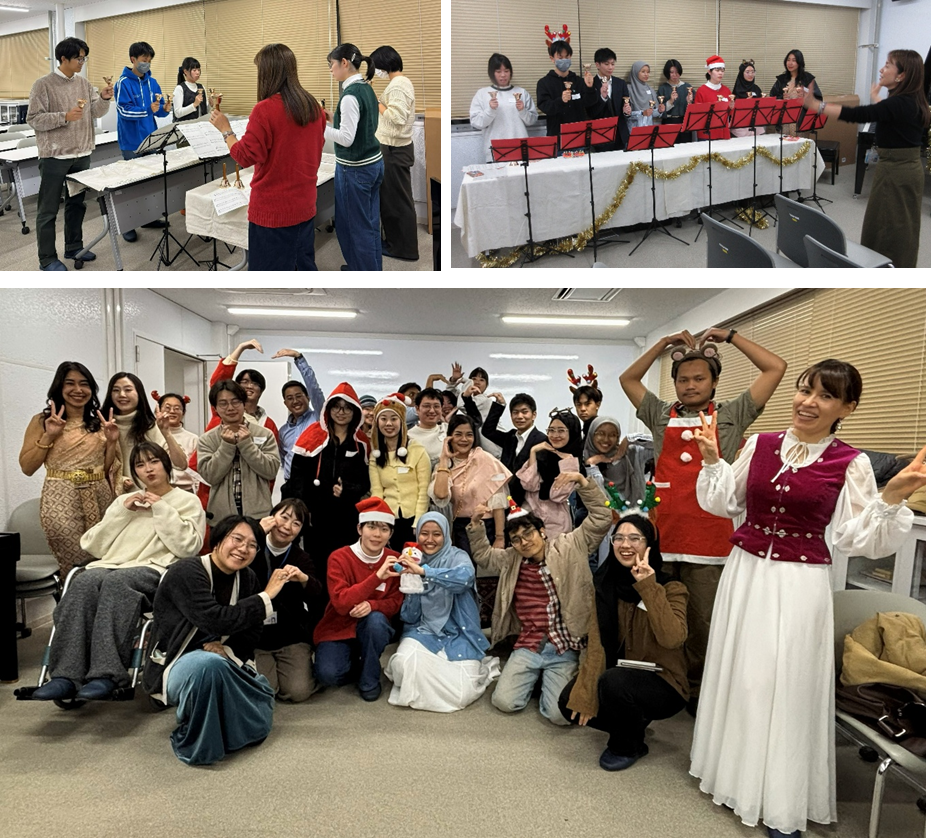
In the final session, participants performed pieces they had practiced over several days under the guidance of a handbell instructor. They also took on the challenge of performing an additional piece together with only a short rehearsal, filling the venue with the clear, resonant sound of the handbells.
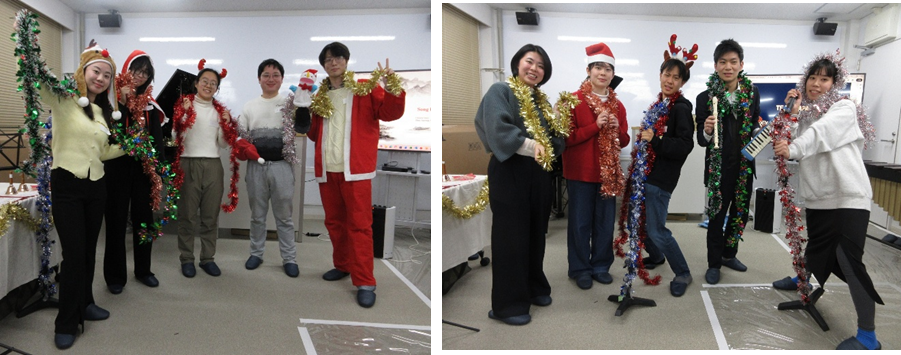
The event concluded with all participants singing “Country Roads” together, creating a memorable farewell for the international students, many of whom were scheduled to return to their home countries just ten days later. Through music, participants connected with one another and shared a warm sense of unity that made the occasion truly unforgettable.
During the post-program reflection session, participants gave presentations on what they had learned about international exchange through music as a medium for intercultural communication.