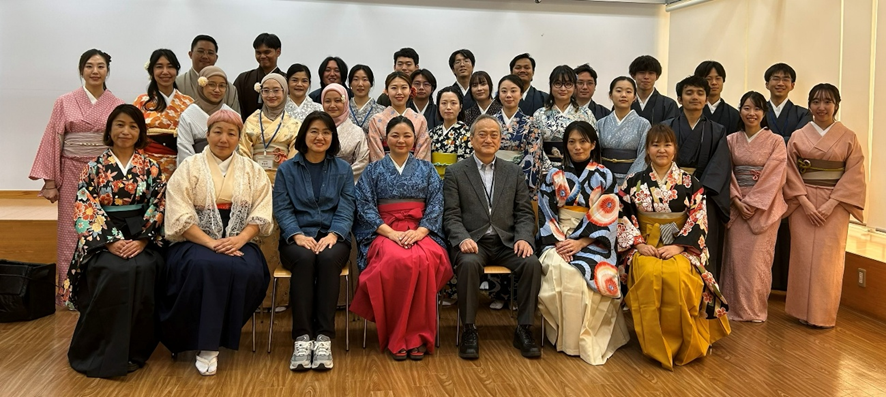
[Activity Report] International Understanding Program Through Traditional Cultural Exchange in Asia Successfully Held
2026.02.10
On November 20, 2025, an international exchange event was held to deepen cross-cultural understanding through a kimono dressing experience and presentations on traditional attire from various Asian countries.
The program was conducted in collaboration with the CAMPUS-Asia6 project under the Inter-University Exchange Project. A total of 27 participants joined the event, including Japanese students participating in the University of Tsukuba’s Multicultural Co-Learning activities, international students in the CAMPUS-Asia6 program, and short-term exchange students from the Korea National University of Education. Through the shared experience of wearing kimono, participants strengthened their intercultural exchange.
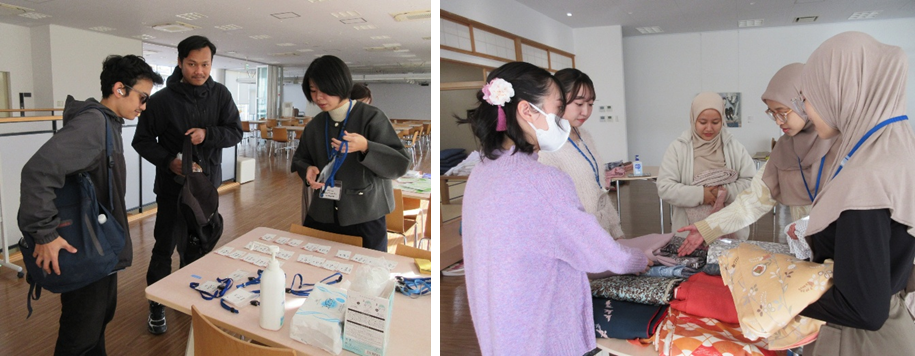
At registration, participants received name tags written in katakana and a pair of tabi socks. Standing before an array of colorful kimonos and obi, the international students carefully selected the colors and patterns that suited them best with advice from the Japanese students, often saying, “Which one should I choose?” Female participants also had the opportunity to enjoy professional hairstyling, creating a lively and festive atmosphere throughout the venue.
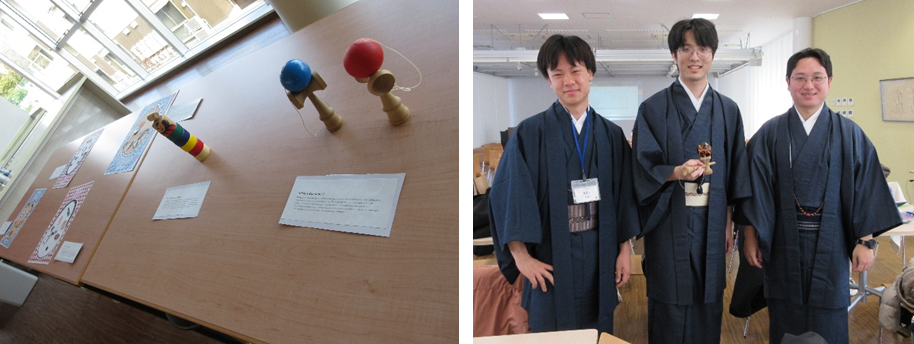
While waiting for their turn to be dressed in kimono, participants were introduced to traditional Japanese games. The most popular activity was Kendama, which filled the venue with smiles and laughter.
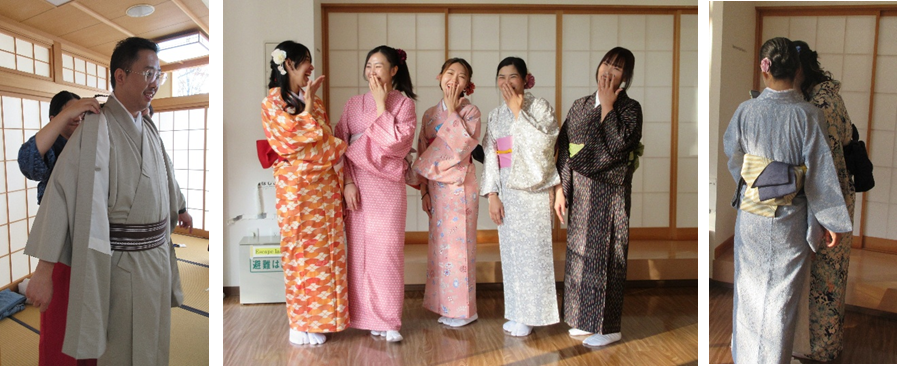
Once dressed in kimono, many participants noticed changes in their posture and the way they walked. Some commented, “I feel like I’m standing up straighter,” and “Wearing kimono makes me feel more confident.” Interestingly, for some Japanese students, it was also their first time wearing a kimono.
During a lecture led by a professional kimono dresser, participants learned about the history of kimono, the meanings behind traditional patterns, and the occasions on which different types of kimono are worn. Having experienced kimono dressing themselves, participants actively asked questions that arose from their firsthand experience.
Afterward, the students gave presentations on the traditional attire of their respective countries, based on their pre-program research. Through these presentations, they came to appreciate that traditional clothing is far more than just apparel—it is a reflection of culture, history, and identity. By learning about and respecting one another’s cultural traditions, participants further deepened their mutual understanding and international awareness.
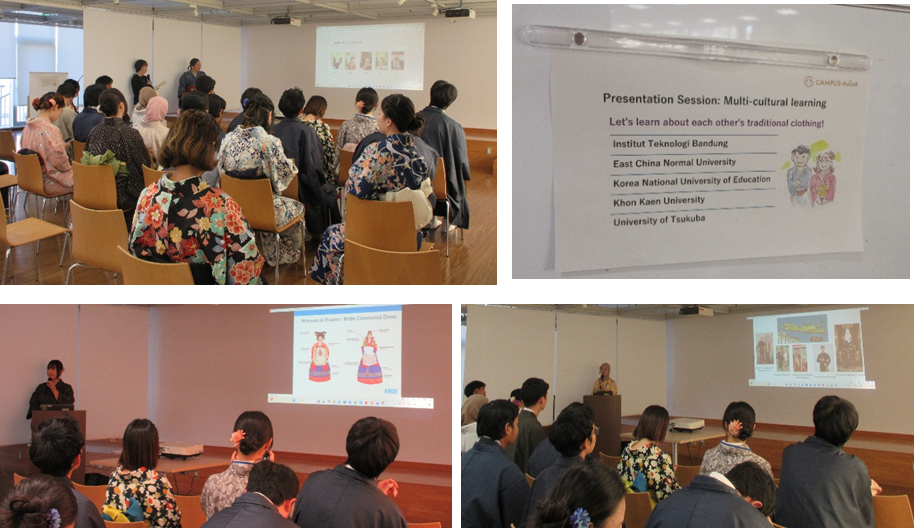
During the post-program reflection session, participants discussed educational policy approaches to promoting international understanding based on their experiences in the program. They highlighted the importance of experiential learning, rediscovering one’s own culture, and developing a comparative perspective. Participants also emphasized the need to foster diversity and inclusivity in learning environments while respecting different cultures and values, as well as the importance of strengthening language skills to facilitate meaningful intercultural communication.
The cultural exchange program provided participants with a valuable opportunity to experience, learn about, and share different cultural traditions, allowing them to gain a deeper appreciation of the significance of international exchange.